
Marsh Grasses and Oyster Beds
Conservation Volunteering in the Low Country
It was mid-December in Charleston SC, and while winter in the south hadn’t yet set in, the days were definitely getting shorter. The frantic holiday season was fast approaching, and soon my home would be full of kids, friends, and a zoo of cats and dogs. It was definitely the perfect time to get outside and do something fun, so I decided to join up again with Charleston Waterkeepers on their last volunteer project of 2025.
For this project we would be teaming up at Shem Creek in Mount Pleasant with the South Carolina Oyster Recycling and Enhancement (SCORE) to collect marsh grass seeds. Marsh grass seeds are used to stabilize newly established oyster beds, and as I would find out, you need a lot of marsh grass seedlings to rebuild an oyster bed.
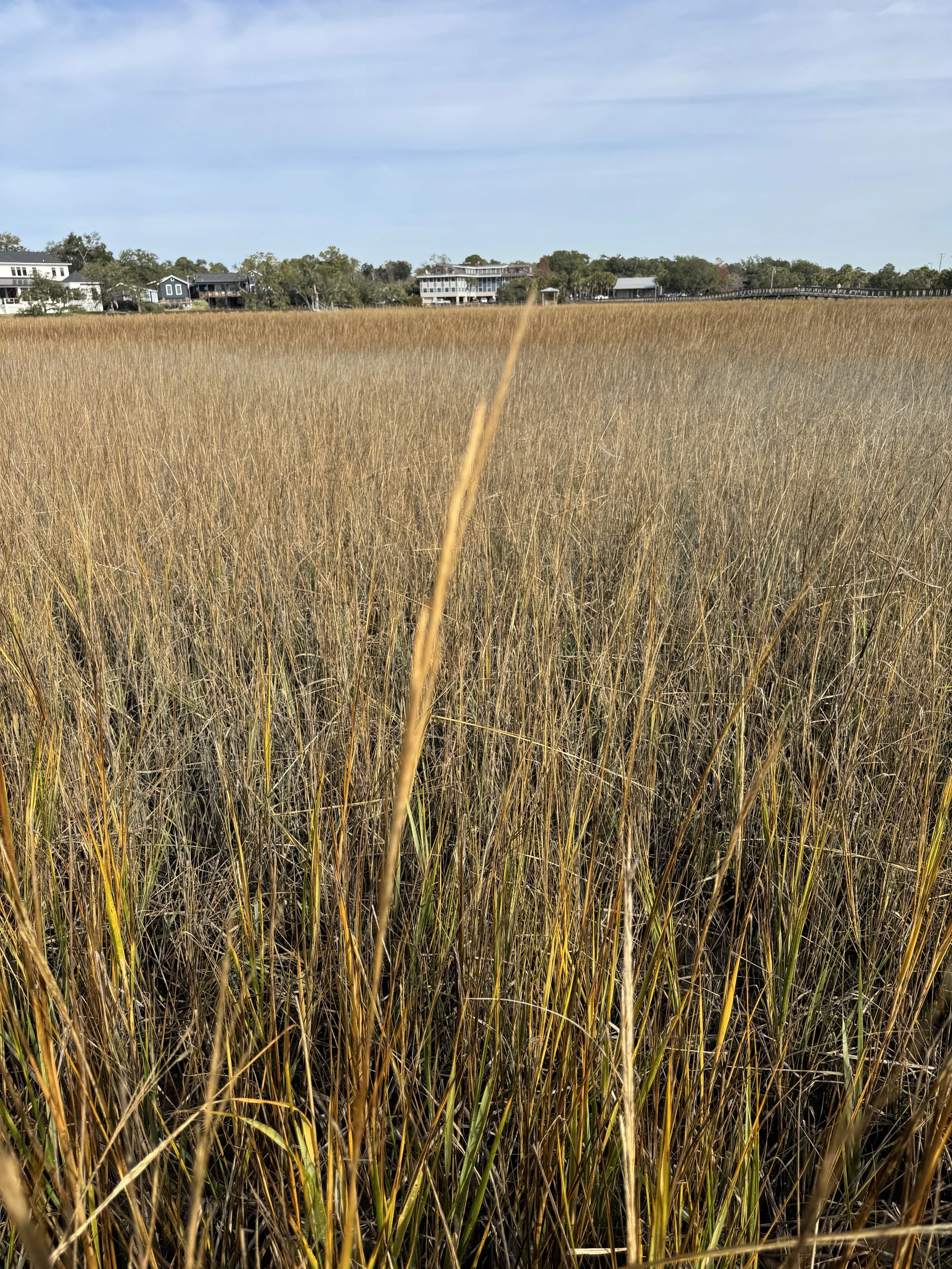
Marsh grass near Shem Creek, Charleston SC
I’m going to be honest, even though I’m a biologist, and the genetics lab that I did my graduate work in did research on seagrasses ( I did mine on fruit flies), I didn’t really know much about seagrass biology other than their importance to coastal ecosystems. I can tell the difference between a seagrass and a fruit fly, of course. And, I did know that there is a difference between a marsh grass and a seagrass - seagrasses are submerged, and marsh grasses grow out of the water. That little fact had absolutely no bearing on the day’s activity - but now you know too.
The marsh grass we were interested in was Spartina alterniflora, commonly known as smooth cordgrass. This was not the first time Spartina and I had met. The previous May I had signed up for my first volunteer tour with the Waterkeepers at Fort Johnson, just outside of Charleston. There, we transferred thousands of tiny 1-2 inch seagrass seedlings into small plastic planters, placed then on trays, and loaded them into one of five greenhouses to wait out the winter. I had wondered at the time where they got all of the seeds for this event, which had about 30 volunteers working for 2 hours to plant. Well, I was about to find out.
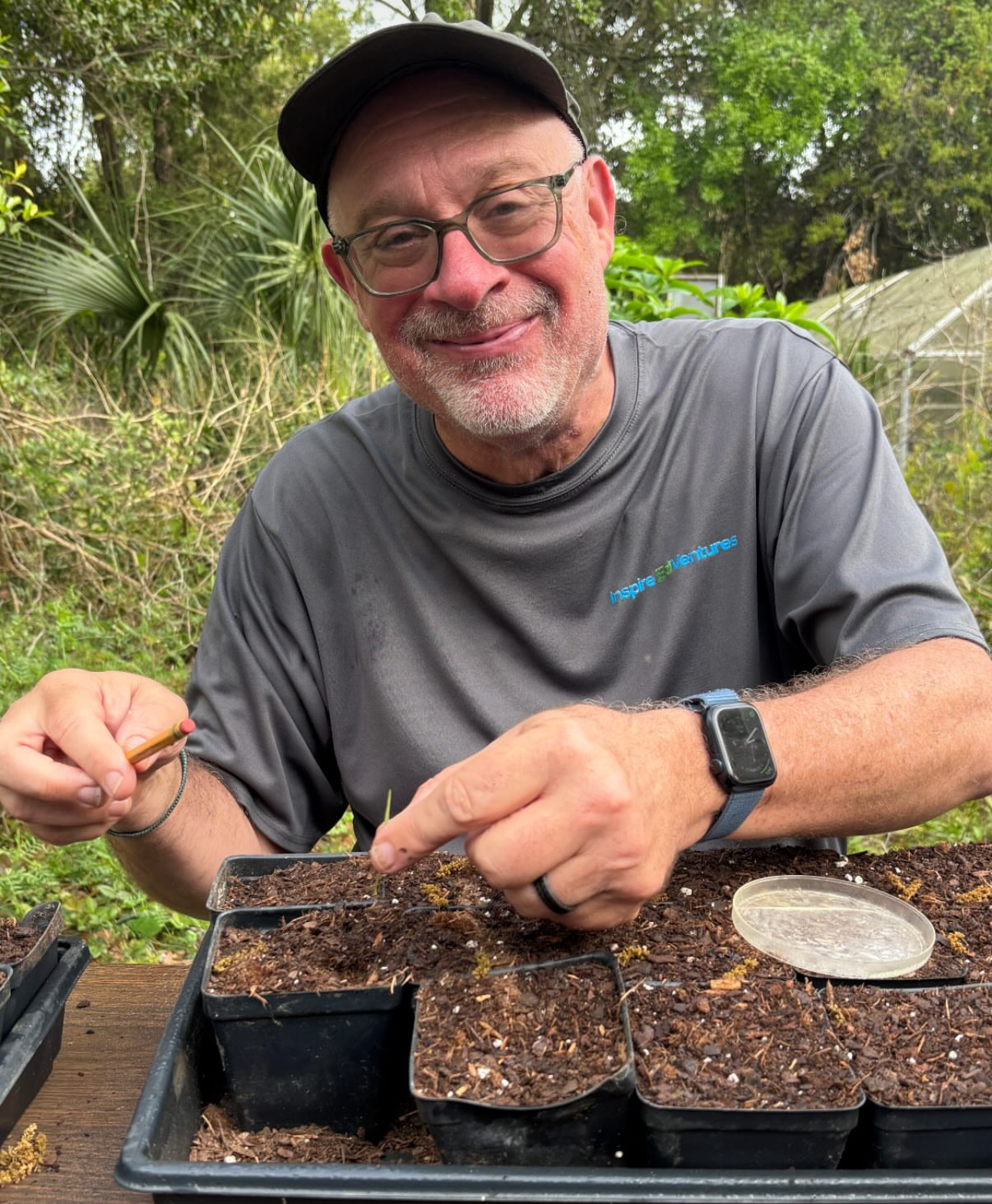
Planting marsh grass seeds with Charleston Waterkeepers
At Shem Creek I was doing the front end of the project, collecting the seeds. It was low tide and there was a vast field of marsh grass in front of us. I was equipped with my boots and a small plastic zip lock bag. After a brief safety lecture, which basically asked us not to get stuck in the mud, but if we did, they would get a rope and come get you out. I found this slightly funny since I am a rather big human, and they were going to need multiple ropes and several more volunteers if I got stuck, but I was confident that they would of planned ahead. Luckily, we never found out - the ground was damp, but firm.
The process was simple. Find a stand of marsh grass. This was easy, it was everywhere. The grasses at this point were ready to release seeds, so all you had to do was use collect the seeds. This was done by placing your thumb and fore finger around the stalk of the plant, just under the seeds, applying a slight bit of pressure and then slide your fingers to the top.
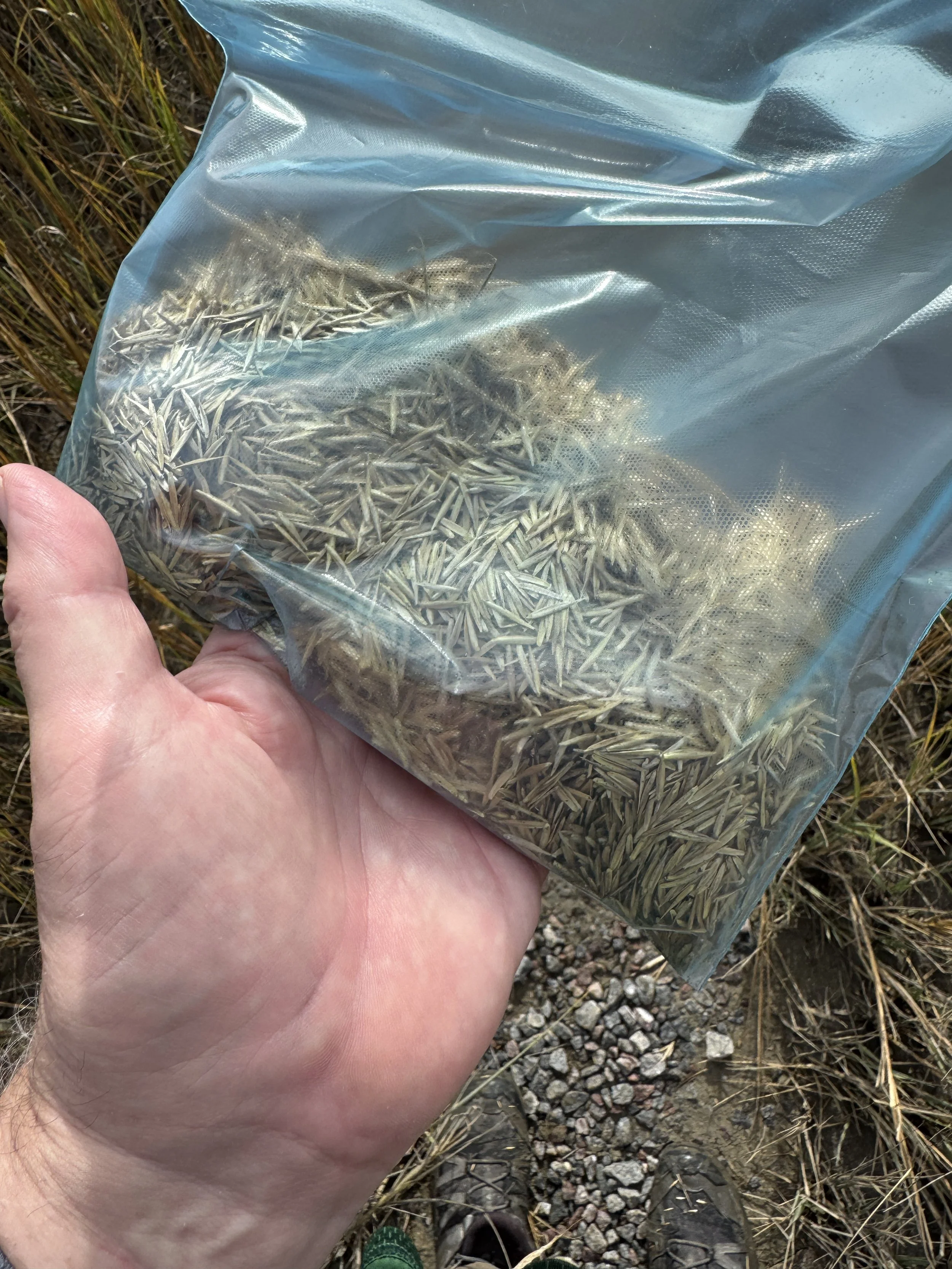
Several thousand (?) Spartina seeds.
Fortunately, this is smooth cords grass, and not razor cordgrass or barbed wire cordgrass, neither of which probably exist. Drop the seeds into the plastic bag, and repeat for two hours, all while in some of the most beautiful scenery on the East Coast.. Volunteer work meets Zen.
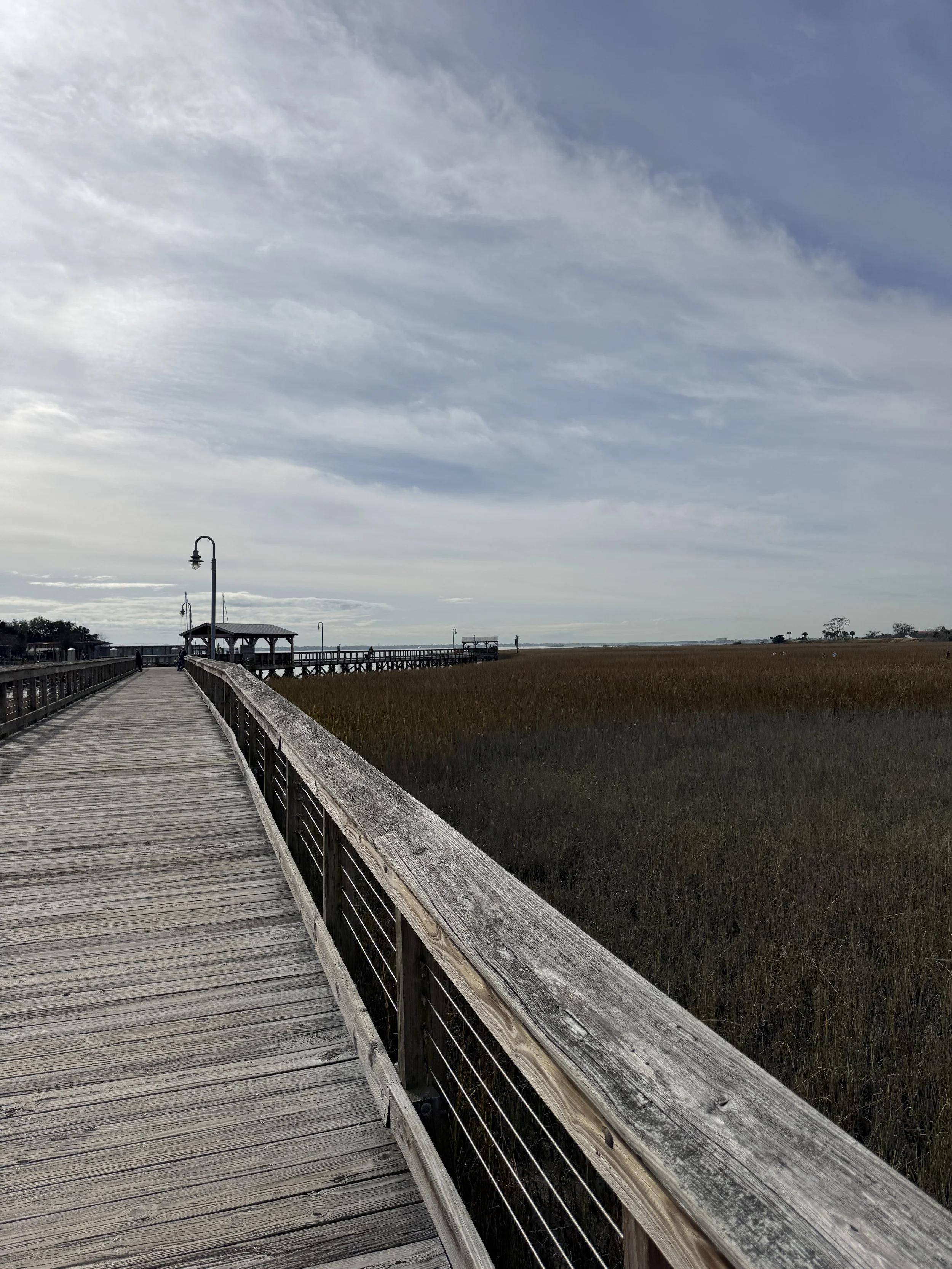
Late afternoon view of the Shem Creek boardwalk. Great place to do some bird watching.
Our goal was to collect 1 million seeds that day. While this sounds like a crazy number, the team of volunteers achieved that goal in less than two hours. Why so many seeds? Well, as I learned, only about 10% of marsh grass seeds germinate. So now I knew where those seedlings I planted on Fort Johnson came from.
I also learned a little more about the process. From there the seedlings would be placed in an environment that mimics southern winters (cool and damp) for 6-8 weeks before plating in the seed trays. There, they would grow to between 12 and 18 inches in height before being planted on the restored oyster beds.
And that’s the only piece I am still missing! The actual work on the oyster bed. I’m watching for the next opportunity so that I can finish the story!
Finally, just a quick plug for the Charleston Waterkeepers. If you’re looking for the chance to get outside and do something different, then you should check out the their volunteer opportunities. They are very active in the area and many of their activities are suited for the whole family. An added benefit is that you get to meet some really interesting people, and work in a beautiful environment - all while promoting conservation work!
For More Information:
Volunteer with the Charleston WaterKeepers